
Working With Nature
As wildfire seasons become longer and more intense, the need for innovative, nature-based protection has never been greater. Enhanced Natural Regeneration (ENR) offers a strategic evolution in how we defend our landscapes, moving beyond traditional mechanical clearing toward biological resilience. By understanding the natural dynamics of the boreal forest, ENR uses the forest’s own biology to create living barriers against the spread of flames. This approach doesn’t just clear land; it actively “repairs” the ecosystem by favoring fire-resistant species in critical buffer zones, ensuring community safety.
The Power of Biological Barriers
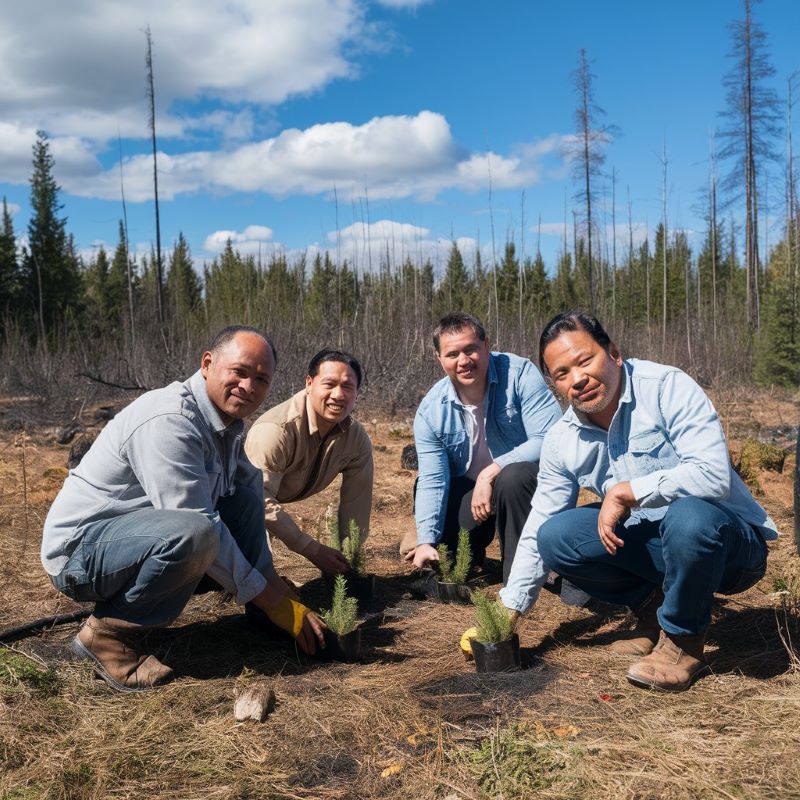
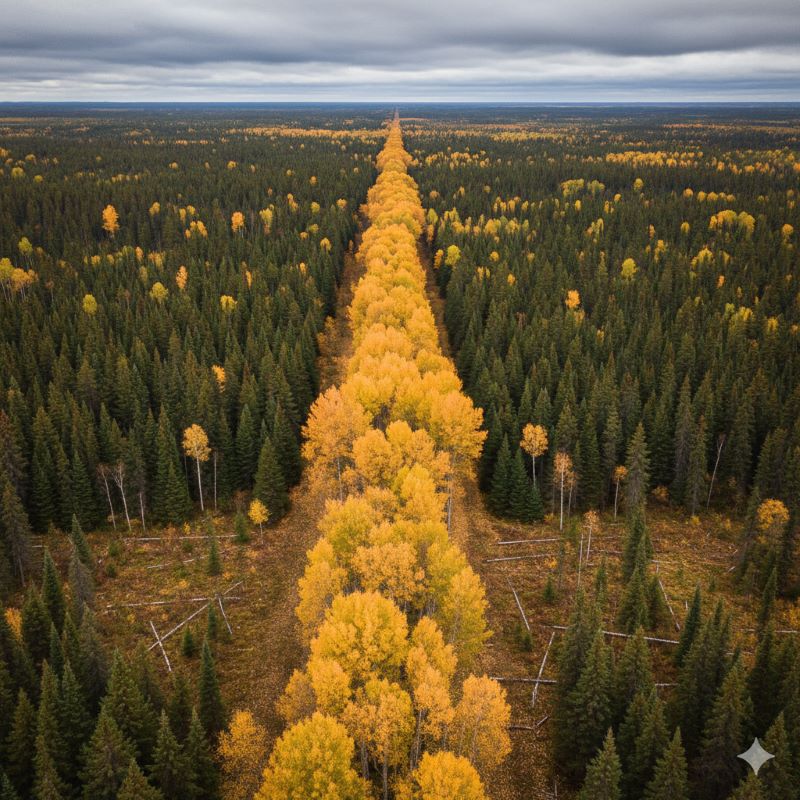
The core of the ENR firebreak strategy lies in the intentional management of trembling aspen. Unlike highly flammable conifers, which often act as “ladder fuels,” deciduous aspen stands have a higher moisture content and a significantly lower ignition risk. ENR workers identify healthy, “wild” aspen saplings and transplant them into strategic firebreak zones, while simultaneously moving juvenile conifers to the exterior of these protected areas. This creates a dense, leafy canopy that can effectively slow a crown fire’s progress. By utilizing local, acclimated saplings instead of nursery-raised stock, these green firebreaks are hardier and more likely to thrive.
Efficient Implementation
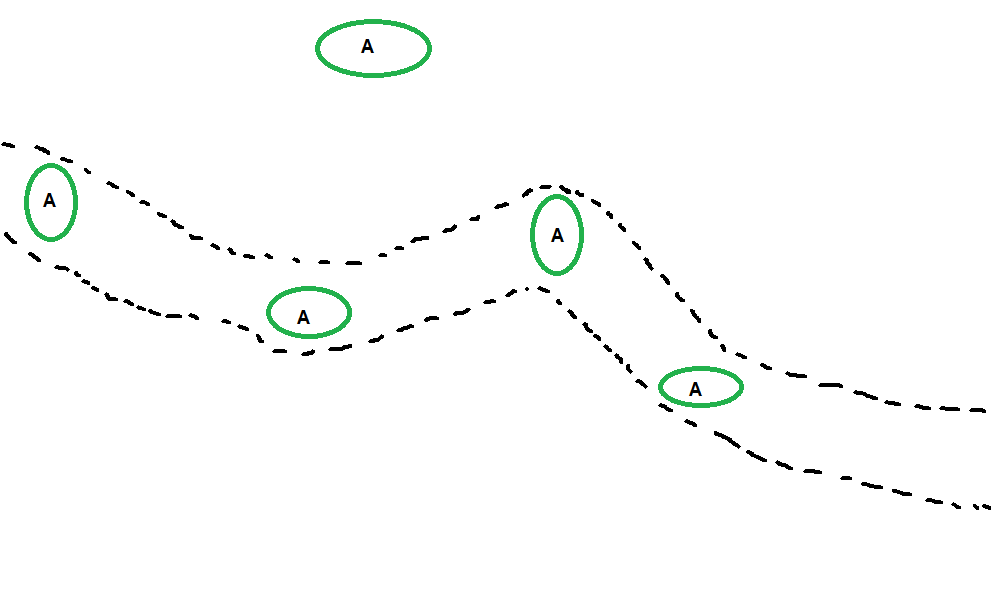
ENR is all about working with nature. Trembling aspen can often grow in patches throughout a forest disturbed area. Consider the diagram below. Looking down over an example plot where the patches of trembling aspen are denoted as “A” inside an oval. If these patches are connected together with transplanting then a continuous firebreak can be realized with a reduced amount of transplanting. The firebreak need not be perfectly straight. The top unused group can be a source of saplings for transplanting the firebreak. There could potentially be an amount of balsam poplar (a similar species to trembling aspen) and suitable for the firebreak. White birch can also be used. Some areas may have very few trembling aspen making the area not a good candidate for a firebreak using ENR. Species identification can be a challenge as ENR is done in the spring and the fall when there are no leaves. An experienced crew member or online research may be required.
A Sustainable Shield for the Future
Implementing ENR firebreaks is an investment in long-term forest health and community security. By shifting from high-maintenance mechanical breaks to self-sustaining biological ones, we create a landscape that is both safer and more biodiverse. This method proves that we don’t have to fight against nature to protect ourselves; instead, by giving the right species a “boost,” we can work with the forest to build a resilient, fire-resistant future.